- Identifying a customer problem worth solving (Customer/Problem Fit)
- Developing a solution to the problem (Problem/Solution Fit)
- Finding a market for your solution (Product/Market Fit)
- Pricing appropriately for your market (Product/Price Fit)
Identifying a Customer Problem Worth Solving
Every business starts with an idea, which is typically based on how the product will solve a particular problem. However, the belief that solving this problem will produce a viable business rests on several underlying assumptions:- That the problem is truly a problem for at least some group of people.
- That the problem is large enough for people to be willing to pay to have it solved.
- That the group of people willing to pay to have this problem solved represents a viable market for the business.
Customer/Problem Fit Study
This study helps understand whether the problem you’ve identified is a real problem, how serious of a problem it is for those it affects. It will also help you start to understand and refine your target audience.Stage: Pre-Release
We recommend sending this study out as early in your process as possible. Validating your problem early can save months of wasted effort. However, it’s not too late to gain useful insights even if you’ve already developed a product.Target Audience: Potential Users
Whether or not you’ve created your product already, we recommend sending this study to potential users via a link study that can be shared on email, social media, or other relevant channels. This will ensure your responses aren’t biased by exposure to your unique solution.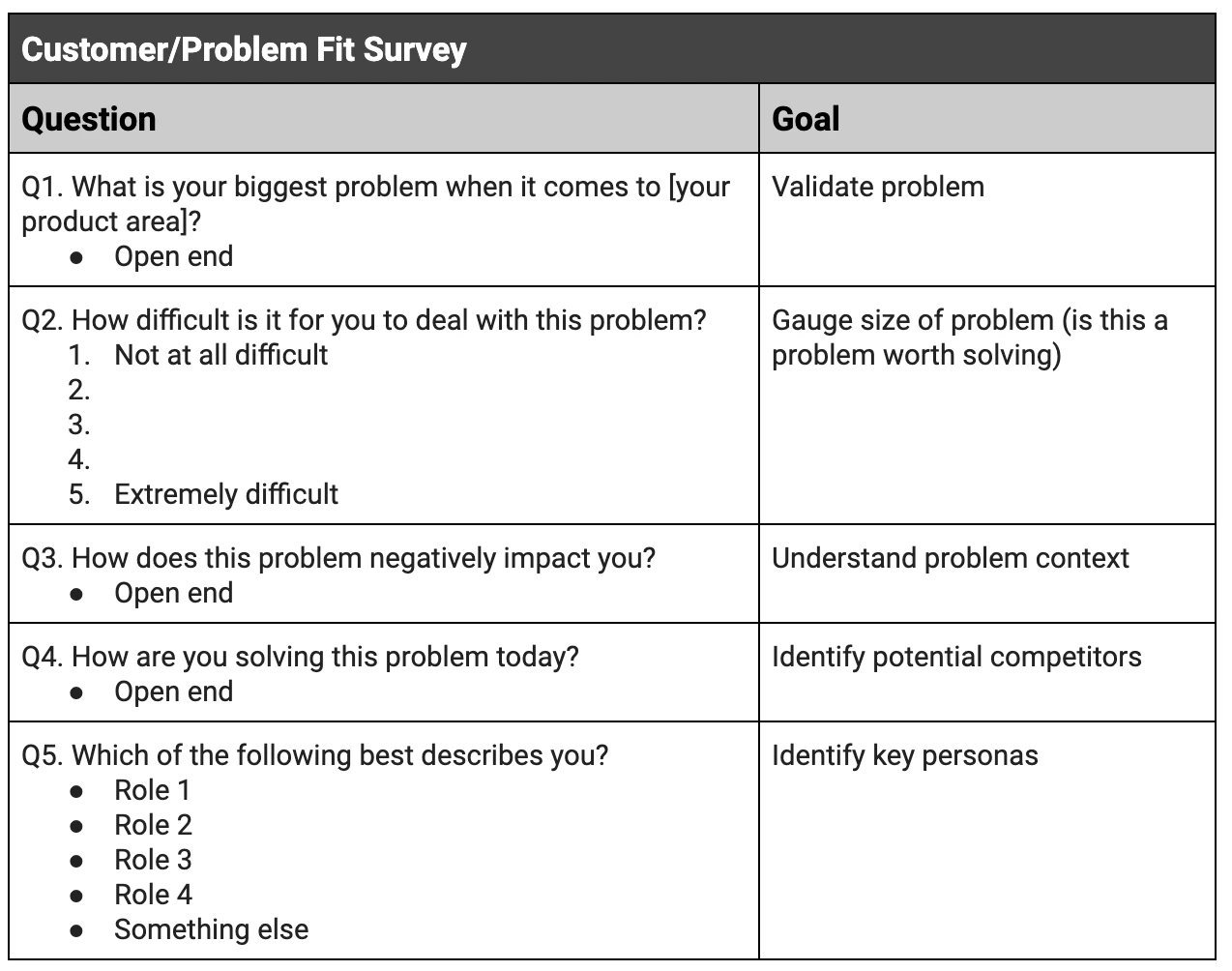
Next Steps
After receiving your results, you’ll be ready to decide on next steps for your business. At this stage, you may need to go back to the drawing board, using insights from the study to re-direct your efforts. Otherwise, you’ll be ready to move ahead, armed with insights about how this problem affects potential users that you can use to refine your concept.Developing a Solution to the Problem
Now that you’ve validated your problem, the next step is to create your product and get it in front of users. Ideally, you’ve collected feedback at a few stages along the way, and now you have a fully operational MVP with real users. Now, you need to assess your progress. Here, you’ll want to learn:- How well does the product you created solve the problem you set out to solve?
- How close are you to meeting user needs, and what do users want to be improved about the product?
- Do users intend to keep using your product?
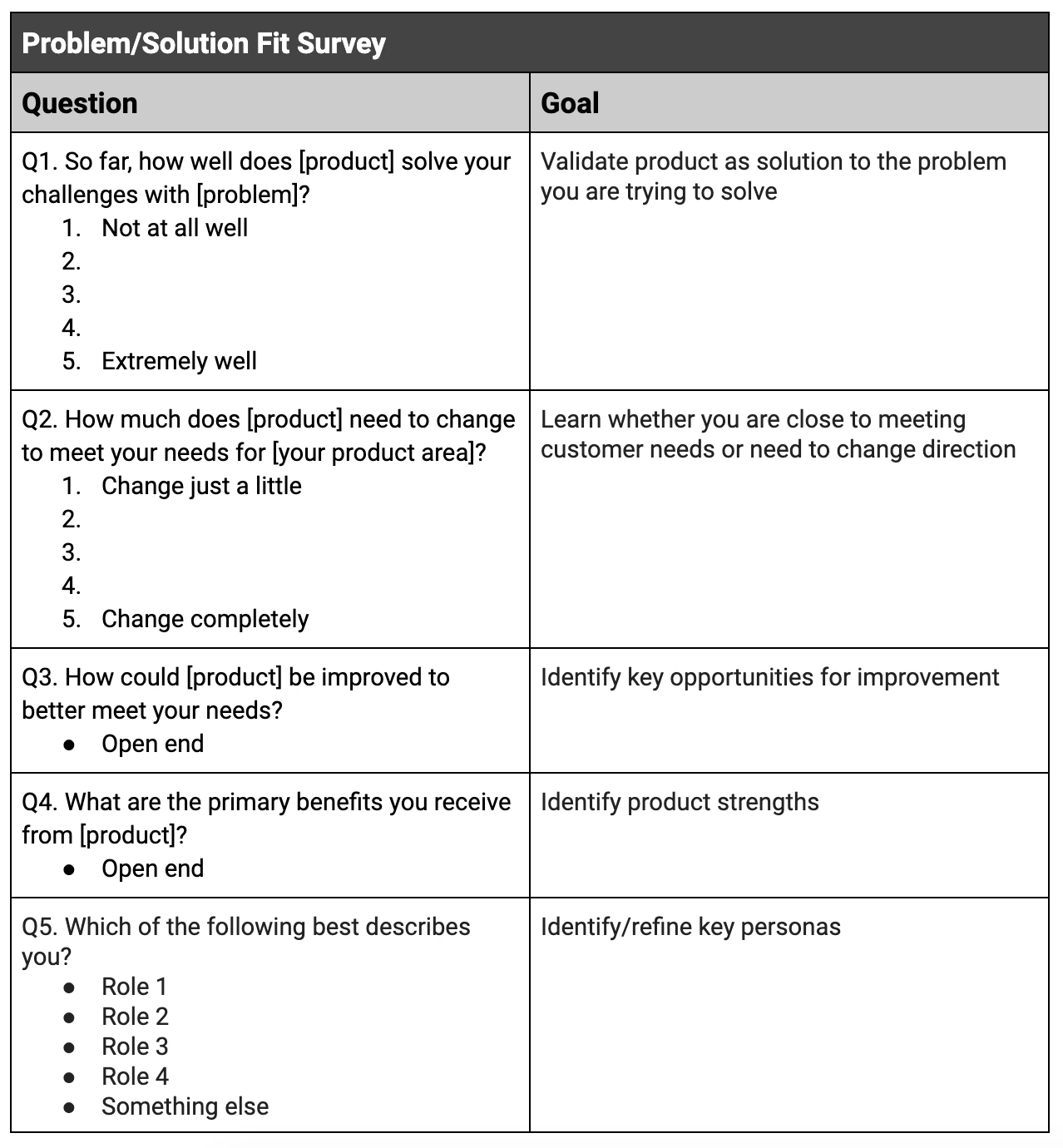
Problem/Solution Fit Study
This study helps understand whether the product you’ve developed is effective at solving customers’ problems and identifies opportunities for improvement. This study will help you gauge whether you should continue to build and optimize or if you instead need to shift direction.Stage: Early Access
We recommend sending this study out once your product is in the hands of real users, but before fully launching to a wide audience.Target Audience: Successfully & Unsuccessfully Onboarded Users
This study should be sent out to two groups of users:- Users who have just completed onboarding (sent in-product), and
- Users who have become inactive without completing onboarding (sent via link).
Onboarding is defined based on your unique product experience; users who are onboarded should have completed an initial action or series of actions that give them some initial insight and experience with your product’s capabilities.
Next Steps
After receiving the results, you’ll know how close your product is to meeting user needs. You’ll be able to decide whether to continue in your current direction or course-correct as needed. With the insights from this study, you’ll identify the most important opportunities to improve your product, and you’ll also gain insights to continue refining your target audience.Finding a Market for your Solution
You’ve validated the core problem your business exists to solve, you’ve developed a product that addresses that problem, and now you’re ready to start honing in on product/market fit. At this stage, you need to understand which customers consider your product a must-have, what makes it a must-have for them, and how you can improve to make the product even more valuable. Understanding these factors will help you outperform the competition on your most critical differentiators and maximize the size of your target audience to ensure a viable market for your product.Product/Market Fit Study
This study helps you gauge progress towards product/market fit and identify opportunities to increase product/market fit (Note: the common definition of product/market fit is when 40% of your users say they would be ‘very disappointed’ if they could no longer use your product). In addition, this study provides insights that enable you to deeply understand your target customers and double down on meeting their needs.Stage: Early Access and Later
You can begin conducting this study as soon as you have a product with active users; however, it’s extremely rare to have achieved product/market fit at this stage, so you will likely want to continue running this study periodically through Early Access and Launch until you have confidence that you’ve achieved product/market fit.Target Audience: All Users, 6 Weeks After Sign Up
This study is sent out to users who have signed up for your product, regardless of their usage since sign-up. You’ll learn the most from users who have engaged with your product actively, but you’ll also gain valuable insights from those who have not. They can help you identify areas to improve, but also help you understand who is and is not a part of your target audience.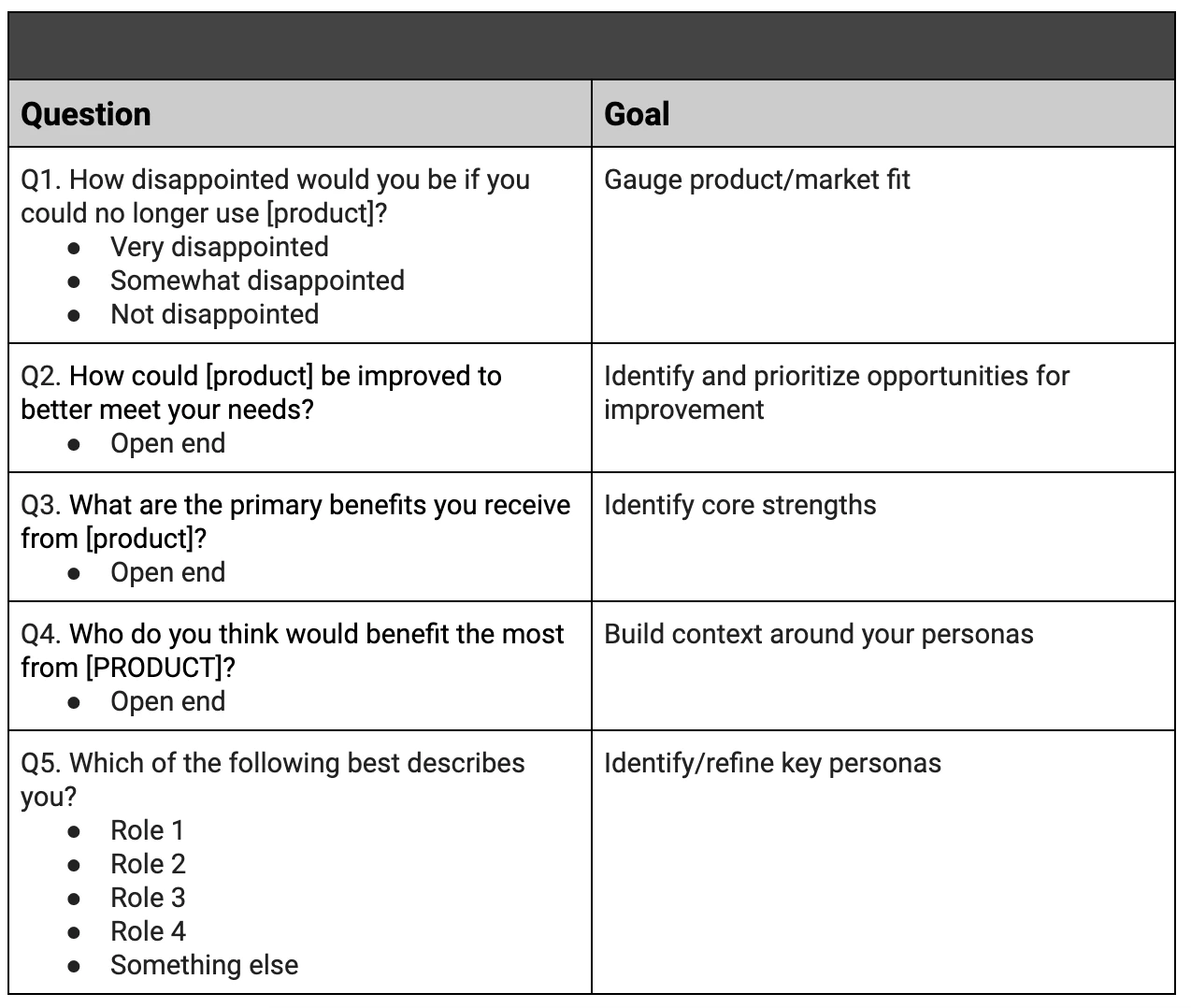
Next Steps
Once this study is complete, you’ll know where you are on your journey to product/market fit. It’s unlikely you’ll have reached it the first time you run this study, but you’ll have identified many opportunities to continue making progress. You can also keep running this study continuously until you’ve achieved product/market fit. This will enable you to collect iterative insights and stay focused on the most important aspects of your product to reach your goals. Further, in the rapidly evolving startup landscape, product/market fit is not guaranteed to last once it’s achieved, so it’s a good idea to continue to conduct this study periodically through your company’s early stages to keep a pulse on your user base and gauge progress.Pricing Appropriately for Your Market
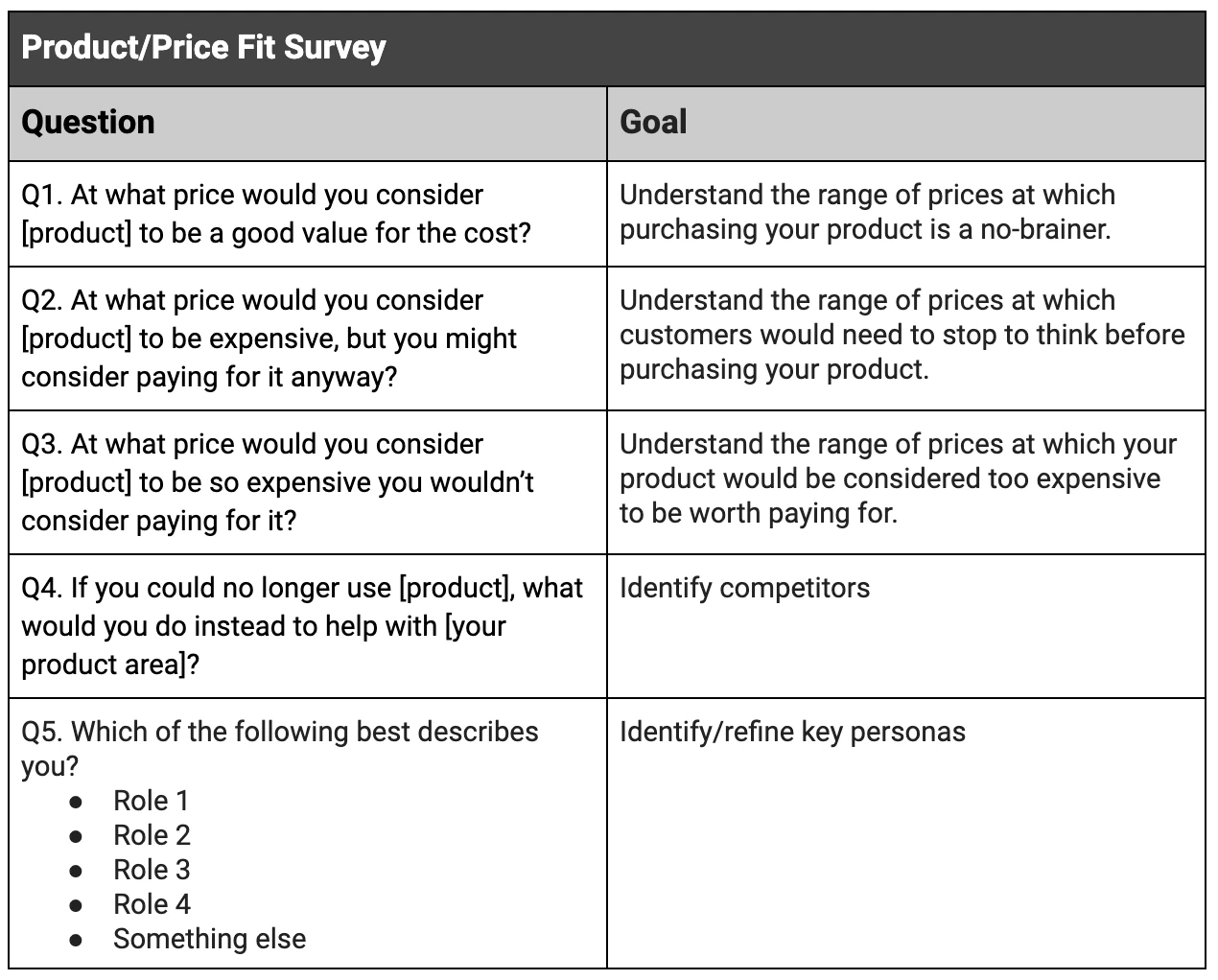
In addition to creating a product users love, you need to create a product users will pay for—and one they will pay enough for to make your business viable. So gauging customer perceptions about pricing can be valuable, even from the early stages.Product/Price Fit Study
Developing an effective pricing model is extremely important to your business’s success, and many inputs should be considered as part of this process. This study will give you valuable insight into how your customers think about the value of your product and produce insights that, along with other inputs, will help you develop a viable pricing model.Stage: Early Access and Later
This study can be run as soon as you have a product that real users are interacting with, but there isn’t anyone right time to run this study. You should use it when you are ready to develop your mid to long-term pricing model.Target Audience: Active Users
We recommend sending this study via link to active users, who have been using your product for at least 8 weeks (or 2 months). They will have a good sense of the value your product provides and what they might be willing to pay for it.