- Journey Progression & Conversion Studies
- Demographic & Profiling Studies
- User Behavior Studies
- Roadmap Definition Studies
Journey Progression and Conversion
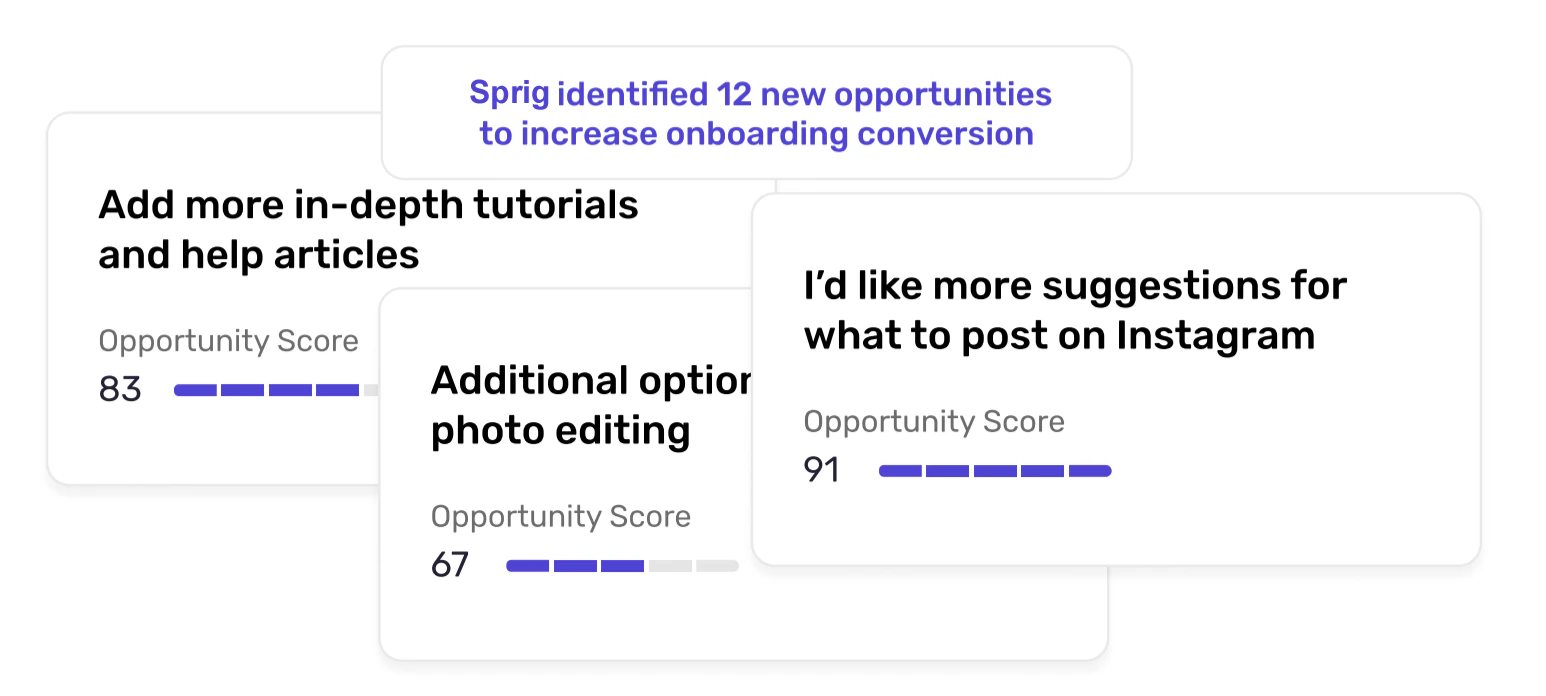
Journey progression and conversion studies focus on understanding how to move customers through the funnel to increase revenue. Using Sprig’s custom journey framework, companies can identify key conversion or journey progression events, such as signups, onboarding completion, purchase, or subscription renewal, and trigger studies when these events occur (or fail to occur). For example, perhaps you’ve noticed that many users who sign up with your product drop off before completing onboarding and you aren’t sure why. This is exactly the challenge Plann faced when the Instagram management tool launched its desktop app. The team needed to understand why visitors weren’t coming back and identify actions they could take to improve results. Plann turned to Sprig and quickly launched two studies to help them understand their customers’ experiences.- Identify Website Conversion Barriers, delivered in-product to users who completed onboarding, to learn how their experience getting started could have been improved.
- Reduce Onboarding Drop-off, delivered via link study in email, targeting users who did not complete onboarding to ask what prevented them from continuing to use the product.
Demographic and Profiling
Profiling studies are intended to give you a more complete picture of your user base than behavioral data alone can provide. For example, you may want to collect demographic data, such as age, to better understand your users’ goals and motivations. One of the most commonly used profiling studies by Sprig customers is our Customer Goals study. This study asks customers to choose from a list of 4-5 pre-defined goals for using your product, which can then serve as segments or personas for understanding your users.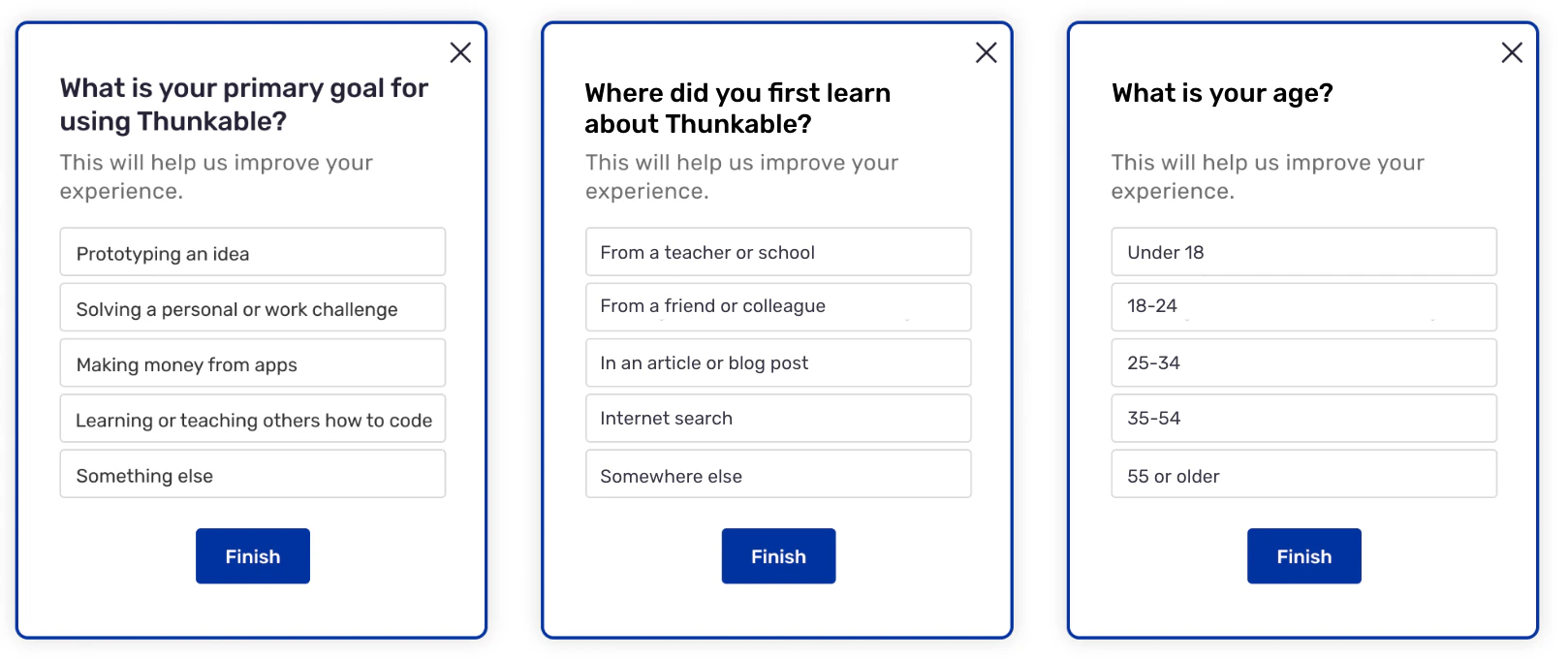
User Behavior
User behavior studies help you interpret the reasons behind specific actions customers take (or don’t take) on your site. One of the most common questions we hear from Sprig customers is “why do users do that?” “That” usually refers to clicking a button, toggling a setting on or off, visiting a particular page, or using a feature in an unexpected way. Using Sprig’s custom event tracking, it’s simple to launch studies targeting user behavior in any of these categories. This study type has proven especially useful for ProGuides, an esports training platform that needed answers to unexplained user behavior. ProGuides had already run Sprig’s Measure Subscriber Satisfaction study and learned that access to pro coaches was one of the most valuable features the platform offered. Yet most of ProGuides’ paid subscriber base was not utilizing the free coaching sessions that came with their subscriptions. To solve this mystery, ProGuides launched a custom study to identify barriers to using the coaching feature. This study uncovered that the top reason for not using this feature was actually quite simple: users didn’t know how to access it.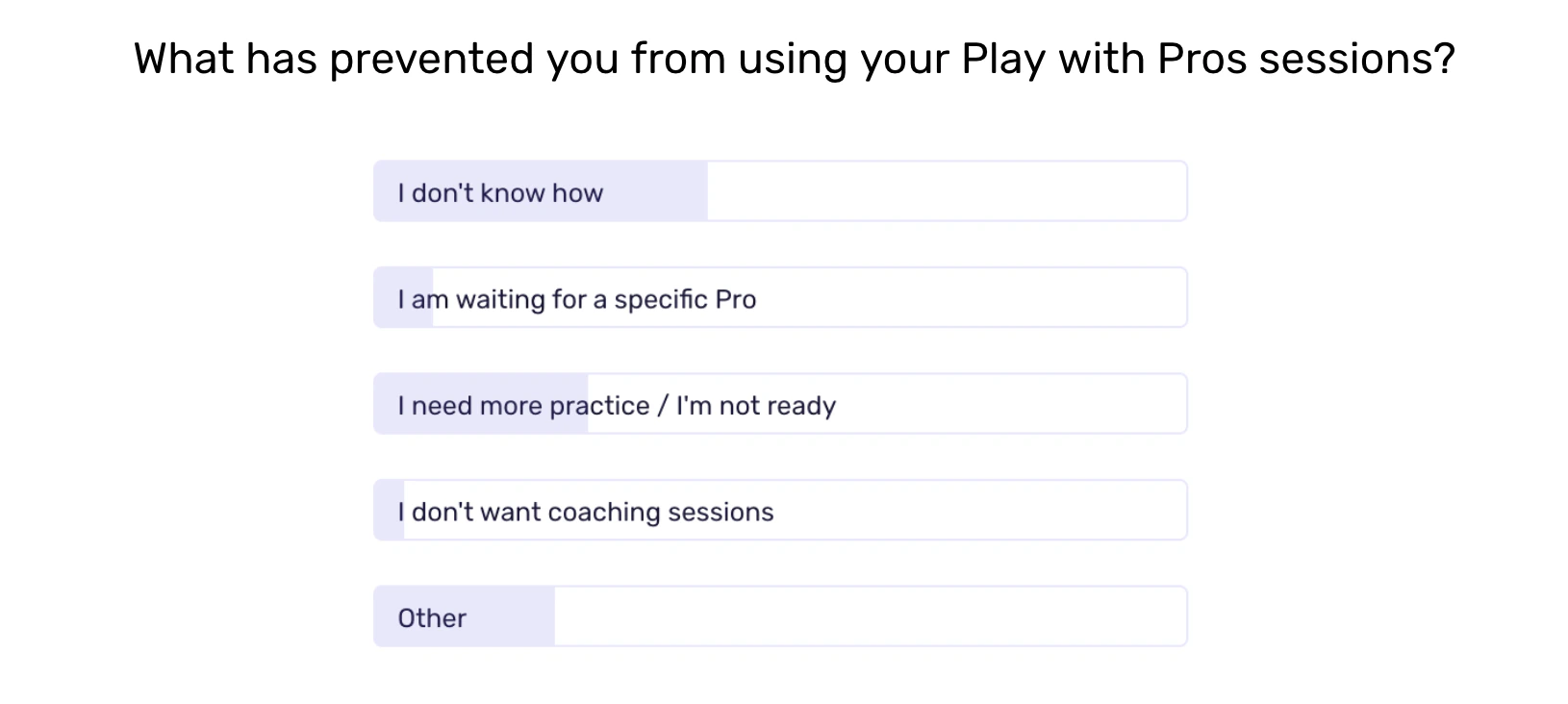
Roadmap Definition
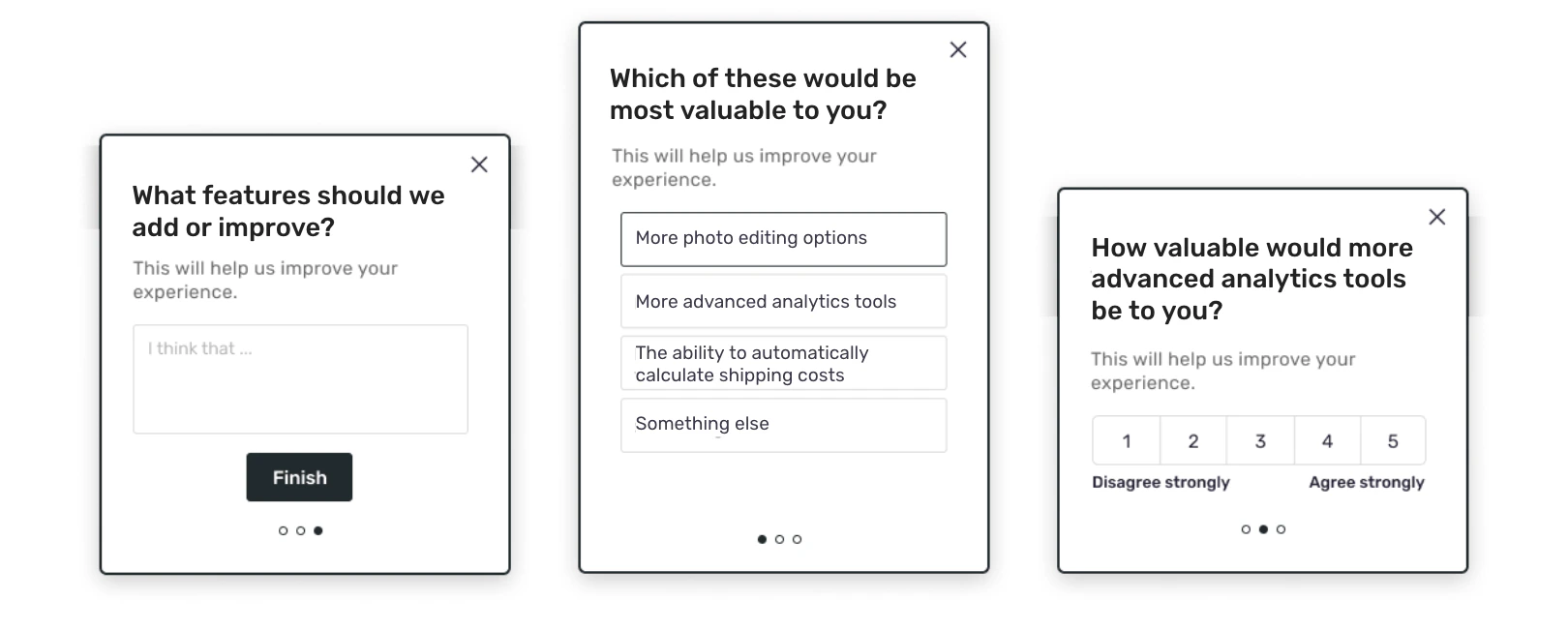
Finally, roadmap definition studies help you learn more about your customers’ feature preferences and priorities. These types of studies can help you prioritize among several features you’re considering focusing on or identify customer needs that you weren’t previously aware of; they can also ensure that you don’t invest time and effort into a feature that users don’t want.